Many website owners publish regularly, tick the usual SEO boxes, and still wonder why their pages stall. Often the missing piece is not a keyword or a backlink. It is proof that a real, knowledgeable and trustworthy source stands behind the content.
That is the idea at the centre of E-E-A-T in SEO. Search results are crowded with pages that say similar things, so Google’s systems and human reviewers look for signals that a page comes from someone who genuinely knows the subject. This guide explains what E-E-A-T means, how it connects to search performance, and what you can do about it this week.
What Is Google’s E-E-A-T Framework?
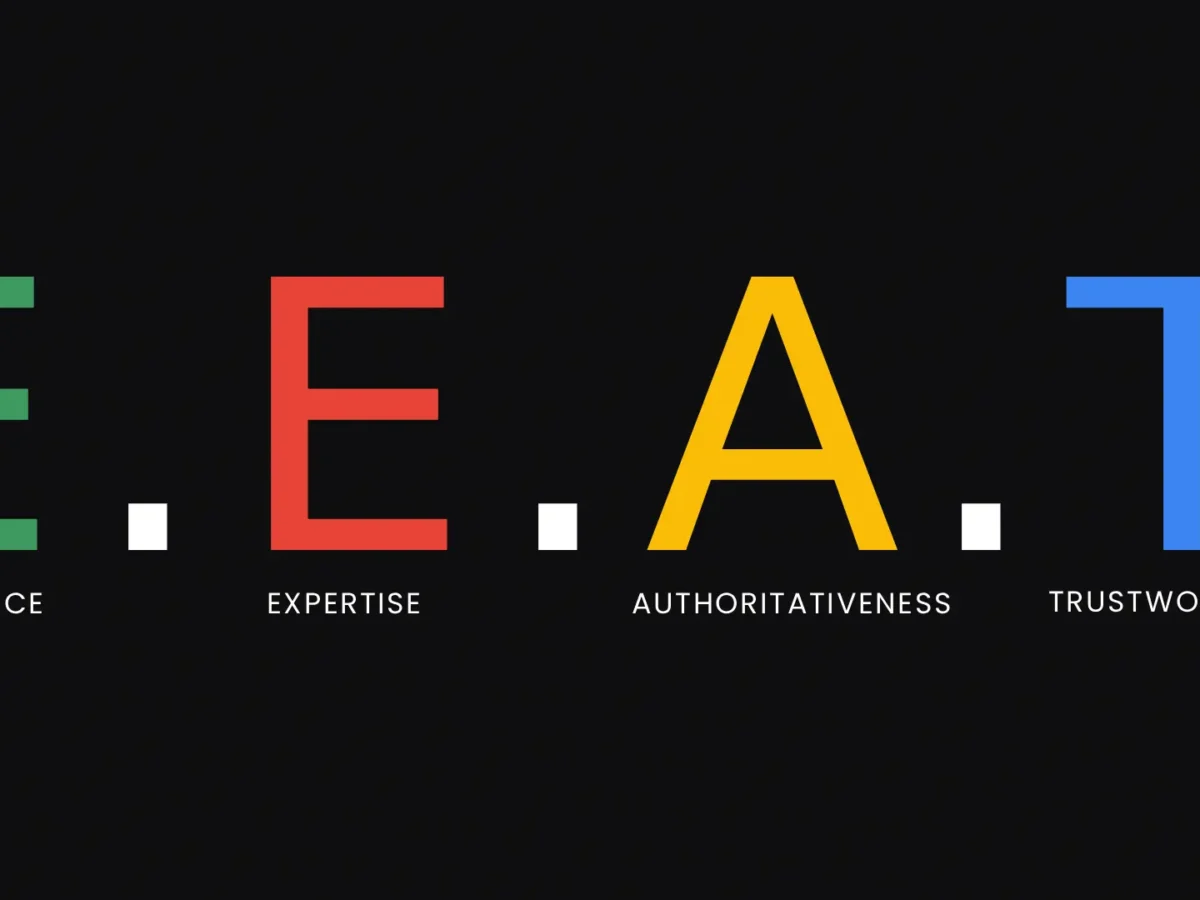
E-E-A-T stands for Experience, Expertise, Authoritativeness, and Trustworthiness. It comes from Google’s Search Quality Guidelines, a document used by thousands of external quality raters who review search results and judge how well they serve people.
Here is the part many articles get wrong: E-E-A-T is not a single score, and it is not a direct ranking factor. Raters do not decide where your page ranks. Their feedback helps Google check whether its ranking systems are producing useful results. Those systems are designed to surface content that shows good E-E-A-T qualities, so the framework is still a very practical lens for your own content.
The extra “E” for Experience was added in late 2022. Of the four ideas, Google describes trust as the most important, with the others supporting it.
Understanding the Four Pillars of E-E-A-T
Experience
Experience asks whether the author has actually done what they write about. A review of a CRM tool written by someone who has run sales teams on it reads differently from a summary of its feature page.
Show it with first-hand detail: your own photos, screenshots, results, process notes, and honest lessons, including what did not work.
Expertise
Expertise is about skill and knowledge. For a topic like health or finance, formal qualifications matter a lot. For a topic like web design or email marketing, years of practical work can be just as convincing.
Show it with accurate, specific, well-explained content, and with author bios that state real credentials and background.
Authoritativeness
Authoritativeness is about reputation. Are you, or your site, a go-to source on the topic? Other credible people and publications mentioning, citing or recommending you is a strong sign.
Show it by earning genuine mentions, speaking at events, publishing original work others reference, and staying focused on the topics you want to be known for.
Trustworthiness
Trust covers honesty, accuracy, transparency and safety. It includes simple things like clear contact details, secure browsing (HTTPS), accurate claims, and visible policies.
Show it by being open about who runs the site, how you make money, and where your information comes from.
How Does E-E-A-T Affect SEO?
Think of E-E-A-T as the standard your content is measured against, rather than a switch you flip. Google’s systems use many signals to identify helpful, reliable pages, and E-E-A-T is a good description of what those signals are trying to capture.
In practice, the effect shows up in a few ways:
- Pages written by clearly identified, knowledgeable people tend to earn more trust from readers, which supports engagement and repeat visits.
- Sites with a strong reputation are more likely to be cited, linked and shared.
- The impact is strongest on topics where bad advice could harm someone’s health, money or safety, which Google calls “Your Money or Your Life” topics.
So rather than asking “how do I rank with E-E-A-T?”, a better question is “how would a stranger decide whether to believe this page?”
Why Google Values Helpful, Reliable, and People-First Content
Google has been consistent about its goal: show people content that is created for people, not for search engines. Its own Google’s Helpful Content Guidelines ask self-assessment questions such as whether your content shows first-hand expertise, whether a reader would leave feeling they learned enough, and whether the page was made to help people or to attract clicks. It is worth reading once and returning to when you review your pages.
Helpful content usually has a few traits:
- It answers the real question quickly, then adds depth.
- It is written or reviewed by someone with relevant knowledge.
- It offers something original, such as examples, data from your own work, or a clear point of view.
- It is kept up to date.
Pages built only to hit a word count or repeat a keyword rarely do any of these things.
Practical Ways to Improve E-E-A-T on Your Website
If you are wondering how to improve E-E-A-T for a website, start with the basics and build from there.
1. Make authorship visible
Add an author name, photo and short bio to every article. Link to a fuller profile page that lists qualifications, roles and past work. Anonymous content is harder to trust.
2. Show real experience
Add case notes, before-and-after screenshots, project photos or lessons from client work. A plumbing company that explains how it diagnosed a specific recurring leak is more convincing than one listing generic tips.
3. Strengthen your About and Contact pages
Tell people who you are, where you operate, how long you have been in business, and how to reach you. Include a phone number, an address if relevant, and real team members.
4. Back up claims and cite sources
When you make a factual point, link to a credible source or explain how you know. If you want a deeper look at how SEO professionals interpret the framework, Ahrefs’ Guide to E-E-A-T in SEO and Semrush’s E-E-A-T Guide are both useful references. They break the concept down with practical examples, and reading two perspectives helps you spot where industry opinion agrees and where it is still interpretation.
5. Build authority beyond your own site
Earn reviews, client testimonials, press mentions, guest contributions and partnerships. Authority is largely what others say about you, so give them reasons to speak well of you.
6. Tie it into your wider SEO plan
E-E-A-T works best alongside technical health, strong content, and a clear keyword strategy. If you want expert support aligning these pieces, working with a specialist provider of SEO Services in Dubai can help you decide where to start and what to prioritise.
A quick example
Imagine a small accounting firm with a blog full of short, generic tax posts and no author names. To improve E-E-A-T, it adds named authors with qualifications, rewrites posts using real client scenarios (with details anonymised), cites official tax guidance, adds a transparent About page, and asks satisfied clients for reviews. None of these changes is a trick. Together, they make the firm easier to believe.
Common E-E-A-T Mistakes Businesses Should Avoid
Even well-meaning teams slip up. Watch for these:
- Fake or inflated credentials. Invented authors, stock-photo “experts” and exaggerated claims damage trust quickly.
- Publishing at scale without review. Large volumes of thin or unchecked content, however it is produced, dilute your credibility.
- Hiding behind a faceless brand. If nobody can tell who is responsible, readers hesitate.
- Ignoring outdated pages. Old advice, broken links and stale pricing quietly erode confidence.
- Chasing links without substance. Authority comes from being worth citing, not only from collecting links.
- Neglecting basic trust signals. Missing privacy policies, unclear refund terms or insecure pages send the wrong message.
How E-E-A-T Supports Long-Term Organic Search Growth
Quick fixes fade, but credibility compounds. When your site consistently shows real experience, clear expertise and honest practices, several good things tend to follow: readers return, other sites reference you, and your content is more resilient when Google updates its systems.
It also protects you. Algorithms change, but the underlying aim, rewarding reliable and helpful pages, has stayed steady. A site built on genuine value is simply better placed than one built around shortcuts. This is why many of the strongest SEO best practices today are really about being a better source, not a louder one.
Conclusion: Building a More Credible Website with E-E-A-T
E-E-A-T in SEO is not a checklist you finish once. It is a way of working: put real people and real knowledge behind your content, be transparent, back up what you say, and keep improving. It is not a direct ranking factor, but it describes the kind of website that Google’s systems aim to reward and that visitors are happy to trust.
Start small. Add author bios, refresh your five most important pages, and tighten your About and Contact details. If you would like a partner to help with strategy, the team at SKYO Global works with businesses on digital marketing and sustainable online growth.
Frequently Asked Questions
How does E-E-A-T affect SEO?
E-E-A-T is used by Google’s quality raters to evaluate search results, and Google’s ranking systems aim to reward content that shows these qualities. It is not a direct ranking factor, but it is a reliable guide for creating trustworthy pages.
Why is E-E-A-T important for Google rankings?
It reflects what Google wants to show searchers: helpful, reliable content from credible sources. Meeting that standard supports user trust and long-term visibility, especially on sensitive topics.
How do I improve E-E-A-T for a website?
Add clear author bios, share first-hand experience, cite credible sources, keep content updated, and make your business details easy to find. Earning reviews and mentions from other trusted sites also helps.
Which of the four pillars matters most?
Google states that trust is the most important. Experience, expertise and authoritativeness all feed into whether a page can be trusted.
Can small businesses compete on E-E-A-T?
Yes. Small businesses often have strong first-hand experience in a niche or local market. Sharing that knowledge openly can make a smaller site more convincing than a larger, more generic one.
Final Call to Action
Want to improve your website’s visibility on Google? SKYO Global helps businesses build stronger SEO strategies, improve organic search performance, and attract the right audience. Explore our SEO Services to take the next step towards sustainable online growth.