If you have ever typed something into Google and wondered why certain websites appear at the top while others seem invisible , you’re already thinking about SEO. Search engine optimization sounds complicated. It has its own vocabulary, its own myths, and an entire industry built around it. But at its core, SEO is simply about making it easier for people (and search engines) to find and understand your website.
This guide breaks down Google’s own SEO fundamentals in plain language , no confusing jargon, no overpromising. Whether you’re running a small business in Dubai, launching a startup in Abu Dhabi, or managing an e-commerce store in Sharjah, the principles here apply to you. And if you’re looking for expert help navigating the digital landscape in the UAE, Skyo’s digital marketing team works with local businesses every day to turn these fundamentals into real, measurable growth.
Let’s get into it.
What SEO Actually Means

SEO is the work you do to help search engines understand your website , and to help people decide it’s worth clicking on. Google crawls billions of pages using automated programs called crawlers (or bots). These crawlers follow links, read content, and build an index of what exists on the web.
When someone searches for something, Google doesn’t search the live internet in that moment. It searches its index, then ranks the results based on hundreds of factors. Your job with SEO is to make sure your pages are in that index, that they’re understood correctly, and that they appear for searches relevant to your business.
Here’s the important part: there’s no secret trick that pushes you to the top overnight. Google itself says so. What does work is consistently doing the right things , creating useful content, making your site easy to navigate, and building a genuine presence online.
The First Step: Can Google Even Find You?
Before doing anything else, check whether your site is already in Google’s index. Open Google and search: site:yourdomain.com
If pages from your site appear, you’re indexed. If nothing shows up, there may be a technical issue blocking Google’s crawlers.
Common culprits include a robots.txt file telling Google to stay away, a noindex tag accidentally applied to your pages, or simply a brand-new site that hasn’t been crawled yet. Google’s Search Console is your best friend here , it’s a free tool that shows you which of your pages Google has found, which have errors, and how often your pages appear in search results.
Once you’re sure Google can find you, the next step is making sure it can understand you.
Structure Your Site So It Makes Sense
Think about how a library is organized. Books aren’t thrown in randomly , they’re grouped by genre, author, and subject. Your website works the same way. A logical structure helps both visitors and Google understand what your site is about and how your pages relate to each other.
Keep your URLs readable. A URL like example.com/services/social-media-marketing tells a story. Something like example.com/p?id=8823 tells nobody anything. Descriptive URLs also appear in search results as breadcrumbs, giving users a visual cue about what they’ll find before they even click.
Group related content together. If you have a blog, a services section, and a products section, organize them into clear folders. This makes it easier for Google to understand the hierarchy of your content and how often different sections update , which affects how frequently Google revisits them.
Deal with duplicate content. Sometimes websites accidentally show the same content under multiple URLs. This isn’t going to get your site penalized, but it does waste Google’s crawling resources and can confuse users. If you notice you have duplicate pages, either redirect non-essential ones to a single preferred URL or use a rel="canonical" tag to signal which version is the “official” one. Most content management systems handle this automatically.
Content Is Still the Most Important Thing
No amount of technical tweaking will make up for weak content. Google’s entire purpose is to help people find useful information, so if your pages genuinely help people, Google wants to show them.
What makes content genuinely useful? A few things that are easy to overlook:
Write for your actual audience, not for an algorithm.
When you try to write “for SEO,” the writing often becomes hollow and stilted. Write for the person sitting at their screen trying to solve a problem, make a decision, or learn something new. When your content actually helps them, they stay longer, come back again, and sometimes link to you , all signals Google pays attention to.
Think about what people are actually searching for.
Someone looking for “affordable web design UAE” and someone searching “best website builders for small business” might both be your ideal customer , but they’re using different words. You don’t need to obsess over every possible keyword variation, but it helps to write naturally about your topic in ways that reflect how real people talk about it.
Keep your content fresh.
An article you wrote two years ago might have outdated pricing, replaced products, or old statistics. Outdated content isn’t just unhelpful , it can erode your credibility. Set a reminder to review and update your important pages periodically.
Don’t copy. This one seems obvious, but it’s worth saying plainly. Copying content from other sites , even with attribution , can trigger Google’s spam filters. Your content should be original, based on your own knowledge, experience, or research.
How Your Site Appears in Search Results
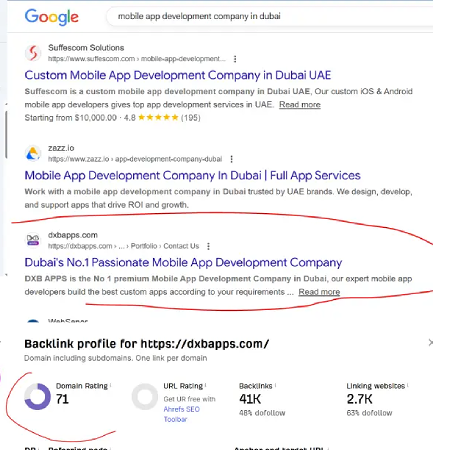
When your page shows up on Google, two things are immediately visible: the title link and the snippet. These small elements have an outsized effect on whether someone clicks.
The title tag is pulled from your page’s <title> HTML element, and it’s usually the big blue clickable text in search results. A strong title is specific, honest about what the page contains, and unique to that page. “Skyo , Digital Marketing Services for UAE Businesses” tells you exactly who they are and who they serve. “Home Page” tells you nothing.
The meta description is the short paragraph beneath the title. Google sometimes ignores it in favour of pulling text directly from your page, but writing a strong meta description is still worthwhile. Think of it as your pitch in 150–160 characters: what’s on this page, why does it matter, and why should someone click?
A page with a weak title and a vague meta description will get ignored even if it ranks , users will scroll past it to something that sounds more relevant and trustworthy.
Images: Don’t Overlook the Visual Side of Search
Many people forget that Google Images is a significant traffic source. If your website uses images , product photos, blog illustrations, infographics , those images can surface in image search results and bring new visitors to your site.
A few habits make a big difference:
Place images near the text they’re related to, so Google can understand the context. An image of a product sitting in the middle of your “About Us” page is confusing for both users and crawlers.
Use the alt attribute on every image. Alt text is a short description of what the image shows, and it’s essential for accessibility (screen readers use it for visually impaired users) and for SEO. “Woman using laptop in Dubai office” is better alt text than “photo” or “image1.jpg.”
Use high-resolution images where possible, but compress them first. Slow-loading images hurt user experience and page speed , both of which Google factors into rankings.
Promoting Your Site: The Longer Game
Publishing great content is only half the job. People need to find it. Beyond Google’s organic crawling, there are several natural ways to get more eyes on your work.
Social media platforms won’t directly boost your search rankings, but they drive real traffic and get your content in front of people who might link to it, share it, or become customers. Community engagement , answering questions in forums, commenting thoughtfully in industry groups, contributing to discussions , builds genuine authority over time.
One of the most lasting forms of promotion is word of mouth. When people genuinely find your content helpful, they tell others. That organic sharing generates backlinks and traffic that no paid campaign can fully replicate.
At Skyo, we help UAE businesses build this kind of authentic digital presence through tailored content strategies, social media management, and search-focused campaigns that actually align with how their customers search online. Rather than chasing short-term tricks, the focus is always on building something that lasts.
Things You Can Stop Worrying About
The SEO industry has accumulated a lot of myths. Here are a few you can safely stop losing sleep over:
The meta keywords tag has been irrelevant for over a decade. Google doesn’t use it.
Keyword stuffing , the old practice of cramming as many keyword variations as possible into a page , actively works against you now. It makes content unreadable, and Google’s spam policies flag it.
Word count targets aren’t a real thing. There’s no magic number that guarantees better rankings. Write what the topic requires , sometimes that’s 300 words, sometimes it’s 2,000.
The exact keywords in your domain name have almost no ranking impact. Choose a domain that works for your brand and your customers, not one packed with keywords.
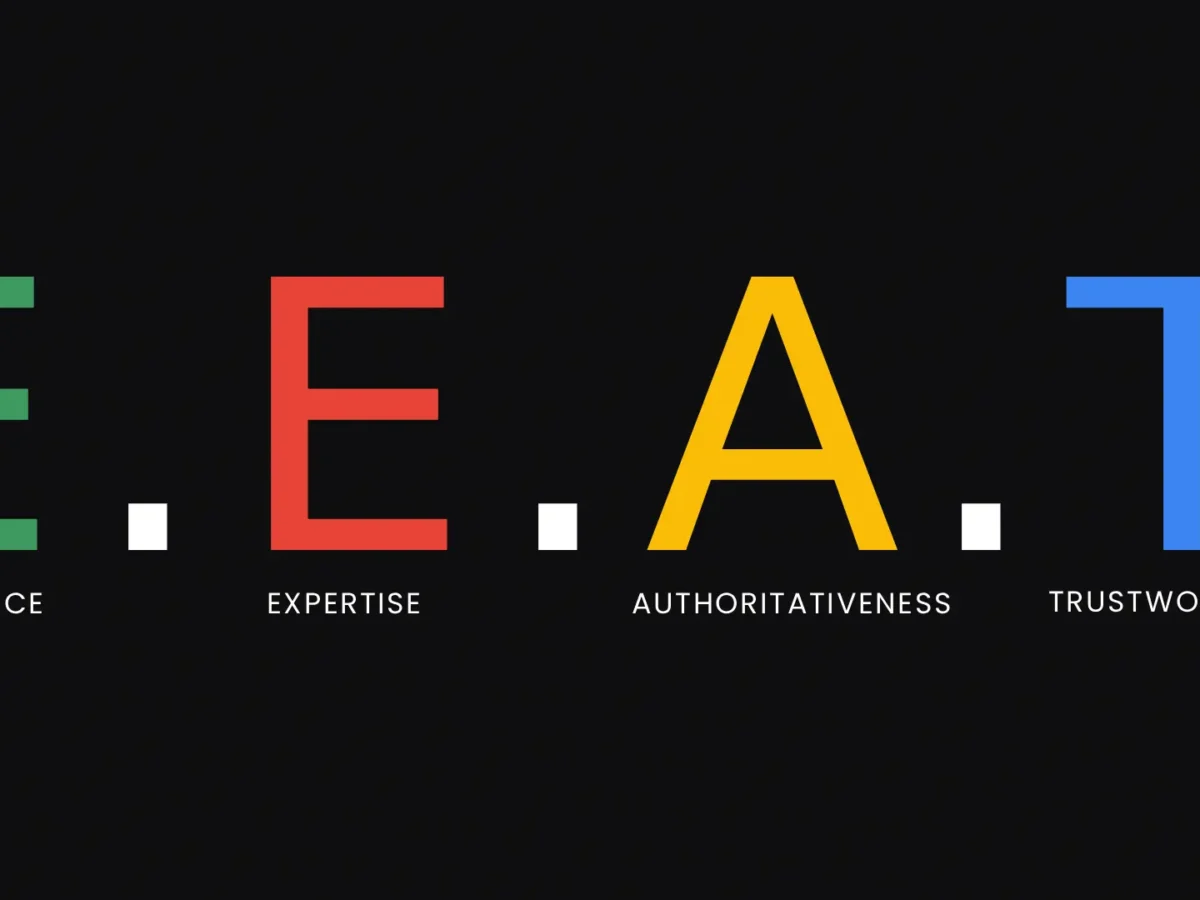
E-E-A-T (Experience, Expertise, Authoritativeness, Trustworthiness) is a concept Google uses for evaluating content quality , but it’s not a direct ranking factor you can technically optimize for. It’s more of a guiding philosophy: create trustworthy content based on real experience, and the rankings tend to follow.
A simple six-month learning path
If you are teaching yourself SEO, go in this order instead of jumping between tactics.
- Month 1: understand intent. Type your target searches into Google and study the results. Are the top pages guides, product pages or videos? That shows what people really want.
- Month 1 to 2: learn on-page basics. Titles, descriptions and headings are small promises to the reader. Make sure the page delivers what the result suggested.
- Month 2: do keyword research around real questions. Specific phrases from forums and customer emails often beat broad, high-volume terms.
- Month 3: publish a few genuinely useful pages. One detailed page that solves a narrow problem beats ten thin ones.
- Months 4 to 5: fix the foundations. Check speed, mobile layout, broken links, your sitemap and indexing.
- Month 6: read your data. Use Search Console and analytics to see which pages bring enquiries, and do more of that.
Free tools worth using
You can do a lot without paying for software.
- Google Search Console: shows what Google has indexed and which searches bring visits.
- Google Analytics: shows where visitors come from and whether they take action.
- PageSpeed Insights: scores mobile and desktop speed and lists fixes.
- Google Trends: shows how interest in a topic changes over time.
- Bing Webmaster Tools: another view of indexing and links, often overlooked.
- Rich Results Test: checks that structured data is valid.
- Screaming Frog (free version): crawls a small site to find broken links and missing titles.
Free tools have limits, such as capped searches or crawl sizes. They are enough to learn and to fix the basics.
Build topics, not isolated pages
Instead of writing about one keyword at a time, build a main page on a topic and surround it with supporting articles that answer related questions. Link those articles back to the main page with natural wording. This shows search engines the page is central to your topic. Also aim for a few relevant links from respected sites rather than many weak ones.
Want help instead of doing it alone? See our SEO services in Dubai.
Where to Go From Here
SEO is not a one-time task. It’s an ongoing practice of improving, testing, and refining. The businesses that see real results are the ones that treat it as a long-term investment rather than a quick fix.
Start with the basics: get your site indexed, clean up your structure, write content that genuinely helps people, and optimize how you appear in search results. Use Google Search Console to monitor your progress. When something works, do more of it. When something isn’t moving, revisit it.
If you’re a business in the UAE and want a team that understands both the technical side of SEO and the nuances of the local market, Skyo offers digital marketing services built around exactly that. The goal isn’t just rankings , it’s connecting you with the people who are already searching for what you offer.
That’s what good SEO has always been about.